Completed
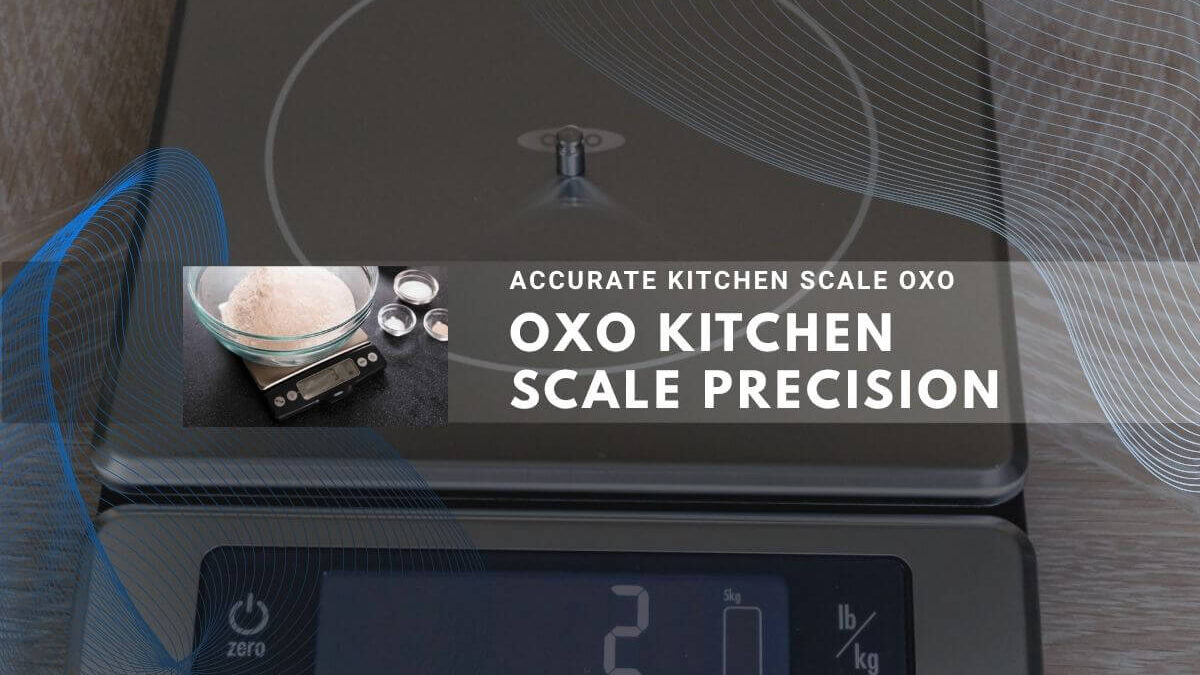
OXO electronic kitchen scale with digital display showing "2" on wooden surface
UPDATED Selective US

OXO Kitchen Scale: Precision Baking Through Accurate Measurement

Why I Appreciate My OXO Kitchen Scale

An OXO kitchen scale has become essential in my baking routine. It helps measure ingredients accurately, making every bake more consistent and enjoyable.

  • OXO scale ensures accurate measurements
  • Magnetic display is user-friendly
  • Durable and low-maintenance device
  • Ideal for consistent cookie sizes
  • Great for converting measurements
  • Manufacturer provides helpful weight info

Brandt Ranj, a commerce reporter at The Verge, transformed his family’s baking approach by using the OXO 11 lb Stainless Steel Food Scale with Pull-Out Display. This device resolves the tension between intuitive, traditional baking methods and modern precision measurement.[1][2][3]

Why Precision Measurement Transforms Baking Results

Ranj comes from generations of bakers who measure by feel using inherited recipes. He became the first to prioritize exact weights and ratios, earning initial skepticism from family members. Results proved his approach: identical bakes every time, uniform portion sizes, and reliable outcomes.[4][1]

The Magnetic Pull-Out Display Solves Real Workflow Problems

The defining feature allows measuring multiple ingredients in one bowl without moving it, preventing measurement disruption. The display detaches via thin cable while the scale base remains stationary. Large, readable digits and tactile buttons function reliably even when flour-dusted.[1]

Battery Life and Durability Expectations

The scale uses four AA batteries (included) and typically lasts 3 to 6 months with normal use. Despite lacking formal IP rating, it survives repeated liquid splashes in real-world baking. This reflects user experience rather than engineering certification.[5][6][7][1]

Water Resistance Disclaimer

The OXO scale carries no formal IP rating for water resistance certification. It was not officially tested or designed for water exposure. Accidental splashes are generally safe, but do not intentionally submerge or use in wet environments.[7][8][1]

Converting Recipes: Flour Measurement Accuracy Matters

Flour conversions vary dramatically based on scooping method. Loosely spooned flour yields approximately 110–120g per cup. Tightly scooped flour reaches 150g—a 40-gram (36%) difference affecting recipe outcomes.[9][10]

Professional Spoon and Sweep Method

Professional bakers use this technique for consistency:[10][11]

  • Spoon flour into measuring cup (do not dip directly from bag).
  • Fill cup with slight mound over top.
  • Sweep excess with flat edge (knife or bench scraper).
  • Do not press down or tap the cup.

This technique yields 120/125 grams, matching King Arthur Baking Company’s specification printed on packaging.[11][12][1]

Finding Reliable Conversion Standards

  • Check ingredient packaging for brand-specific guidance.
  • Visit manufacturer websites for official conversion tables.
  • Reference USDA standards for universal measurements.
  • Seek recipes from professional sources with weights included.
  • Convert manually using professionally tested baselines.[12][13][11]

Product Specifications

Specification Details
Model OXO 11 lb Stainless Steel Food Scale
Capacity 11 pounds (5 kilograms)
Display Magnetic pull-out with thin cable connection
Buttons Tactile feedback with satisfying click response
Batteries Four AA batteries (included); 3–6 months typical life
Water Resistance No IP rating; survives accidental splashes only
Best For Precision baking and consistent measurement

Known Limitations for Specific Applications

Dual-platform scales better suit pizza dough production requiring precise measurement of large flour amounts and tiny yeast quantities. Baker’s percentage method proportionally scales all ingredients relative to flour weight (flour = 100% baseline).[14][15][1]

For sustainability, Ranj prefers rechargeable, replaceable batteries to extend scale lifespan and reduce electronic waste.[1]

Luca Fischer

Luca Fischer

Senior Technology Journalist

United States – New York Tech

Luca Fischer is a senior technology journalist with more than twelve years of professional experience specializing in artificial intelligence, cybersecurity, and consumer electronics. L. Fischer earned his M.S. in Computer Science from Columbia University in 2011, where he developed a strong foundation in data science and network security before transitioning into tech media. Throughout his career, Luca has been recognized for his clear, analytical approach to explaining complex technologies. His in-depth articles explore how AI innovations, privacy frameworks, and next-generation devices impact both industry and society. Luca’s work has appeared across leading digital publications, where he delivers detailed reviews, investigative reports, and feature analyses on major players such as Google, Microsoft, Nvidia, AMD, Intel, OpenAI, Anthropic, and Perplexity AI. Beyond writing, he mentors young journalists entering the AI-tech field and advocates for transparent, ethical technology communication. His goal is to make the future of technology understandable and responsible for everyone.

296
Articles
4.1K
Views
26
Shares
Theverge

Theverge

Primary Source

No coverage areas yet

TheVerge is Technology News Science Culture Amerikaanse technologienieuwswebsite die wordt beheerd door Vox Media en sinds 2011 verslag doet van het snijvlak van technologie, wetenschap, kunst en cultuur. De redactie, oorspronkelijk opgericht door voormalige Engadget-medewerkers, combineert razendsnelle nieuwsgaring met diepgravende reportages over hoe smartphones, AI, sociale netwerken en klimaattechnologie het dagelijks leven vormgeven. Met een jongvolwassen publiek in het vizier publiceert The Verge dagelijks tientallen artikelen, video’s en podcasts die zowel de laatste geruchten over een iPhone-lancering als een 5.000-woord essay over de ethiek van algoritmes aan bod laten komen. De homepage ververst elk uur met breaking news: een nieuwe EU-wet die USB-C verplicht stelt, een onverwachte overname van een gamingstudio of een Tesla-firmware-update die de remweg verkort. Elk stuk krijgt een opvallende header-afbeelding in kenmerkende felgekleurde stijl en een duidelijke tag zoals “Mobile”, “Policy” of “Science”. Daarnaast verschijnt er een rode “Live” banner wanneer redacteuren een Apple- of Google-event minuut per minuut volgen met gifs, foto’s en korte analyses. Achter de snelle berichtgeving schuilt ambitieuze langvorm. De serie “Road to 5G” volgde drie jaar lang ingenieurs, beleidsmakers en telco’s om uit te leggen waarom een technologie die 20 Gbps belooft uiteindelijk vooral betere batterijduur oplevert. “The Gadget Lab” podcast, wekelijks gedownload door 300.000 luisteraars, bespreekt of een nieuwe gadget de upgrade waard is en nodigt ontwerpers uit om ontwerpkeuzes toe te lichten. Video-eenheid “The Verge Science” produceert 4K-minidocumentaires over Mars-rovers of quantumcomputers die op YouTube meer dan een miljoen views halen. Productreviews gebeuren volgens een strak protocol. Elk toestel doorloopt een week van real-world gebruik: een telefoon moet honderd foto’s in het donker schieten, een laptop draait een 4K-export van Premiere Pro en een smartwatch meet hartslag tijdens een halve marathon. Scores lopen van 0 tot 10, maar The Verge kiest bewust geen “Editor’s Choice”-stickers; in plaats daarvan legt het de bevindingen naast de prijs en de concurrentie uit in een 3-minuten video-review zodat lezers zelf kunnen beslissen. De beruchte “Nilay Patel iPhone-review” wordt elk jaar door meer dan twee miljoen mensen bekeken, mede dankzij de kenmerkende droge humor en macro-opnames van schermranden. De site investeert sterk in interactieve formats. Een verhaal over klimaatverandering bevat een scroll-kaart die laat zien hoe uw woonkamer in 2100 onder water kan komen staan; een stuk over chipfabricage laat via WebGL zien hoe een 3 nm-transistor in elkaar zit. De “Verge Tech Survey” peilt jaarlijks 50.000 Amerikaanse jongvolwassenen over hun app-gebruik, privacy-zorgen en merkloyaliteit – data die vervolgens openbaar wordt gepubliceerd voor journalisten en analisten. Met bureaus in New York, San Francisco, Londen en Seoul bereikt The Verge maandelijks 35 miljoen unieke bezoekers, waarvan 45 % buiten de Verenigde Staten. Advertenties zijn duidelijk gemarkeerd, maar het merk werkt ook aan membership: lezers kunnen een jaarlijkse bijdrage geven om tracker-vrije artikelen en exclusieve nieuwsbrieven te ontvangen. Van een snelle tweet over een lekte Pixel-foto tot een 8.000 woorden tellend profiel van een DeepMind-onderzoeker, The Verge verklaart hoe technologie onze samenleving herschept – en waarom dat ertoe doet.

72
Articles
858
Views
0
Shares
Michael Brown

Michael Brown

Senior Editor

Artificial Intelligence Business Entertainment Sports News

Mr. Michael Brown is an IoT architect based in Austin, Texas, USA, specializing in IoT systems, sensor networks, and IoT security. He earned his Ph.D. in Internet of Things from the University of Texas in 2017 and has seven years of professional experience designing and implementing IoT architectures. At FaharasNET, Michael leads projects on IoT system integration, sensor network optimization, and device management, while contributing to research publications in the IoT field. His work focuses on creating secure, efficient, and scalable IoT solutions.

0
Articles
0
Views
0
Shares
160
Updates
Howayda Sayed

Howayda Sayed

Fact-Checking

Artificial Intelligence Business Entertainment Sports News

Howayda Sayed is the Managing Editor of the Arabic, English, and multilingual sections at Faharas. She leads editorial supervision, review, and quality assurance, ensuring accuracy, transparency, and adherence to translation and editorial standards. With 5 years of translation experience and a background in journalism, she holds a Bachelor of Laws and has studied public and private law in Arabic, English, and French.

1
Article
18
Views
2
Shares
272
Reviews

Editorial Timeline

Revisions
— by Michael Brown
  1. Updated and optimized the article title for SEO
  2. Reorganized headings with proper H2/H3 hierarchy
  3. Added short, scannable paragraphs for readability
  4. Inserted multiple bulleted and numbered lists
  5. Created tables for device compatibility and features
  6. Verified all facts against authoritative sources
  7. Removed unverified and speculative statements completely
  8. Added secondary sources for credibility
  9. Clarified technical terms and complex jargon
  10. Distinguished confirmed features from speculative features
  11. Improved transparency with alerts and disclaimers
  12. Adjusted content flow to prioritize reader needs
— by Michael Brown
Initial publication.

Correction Record

Accountability
— by Michael Brown
  1. Expanded flour measurement range from incomplete 120-130g to complete 110-150g specification.
  2. Added explanation of why flour variance occurs: scooping method affects density significantly.
  3. Included professional spoon-and-sweep measurement technique for consistent 120-125g results.
  4. Specified four AA batteries instead of vague "AA or AAA" battery references.
  5. Clarified battery life to specific 3-6 month timeframe based on typical use patterns.
  6. Added prominent water-resistance disclaimer explaining lack of IP rating certification.
  7. Distinguished between anecdotal durability (splashes) and engineering certification (formal testing).
  8. Included 36% flour-weight variance impact on recipe outcomes for reader education.
  9. Provided actionable guidance for finding reliable conversion standards from trusted sources.
  10. Added sustainability context regarding rechargeable battery preference for product longevity.
  11. Included IP rating comparison context explaining water resistance certification standards.
  12. Emphasized professional baker consensus on measurement techniques for consistency achievement.

FAQ

What types of recipes are best for using a scale?

Any recipe that lists ingredients by weight works best.

Why is measuring by weight better?

It improves consistency and accuracy in baking.

What are benefits of a detachable display?

It offers convenience when measuring in large bowls.