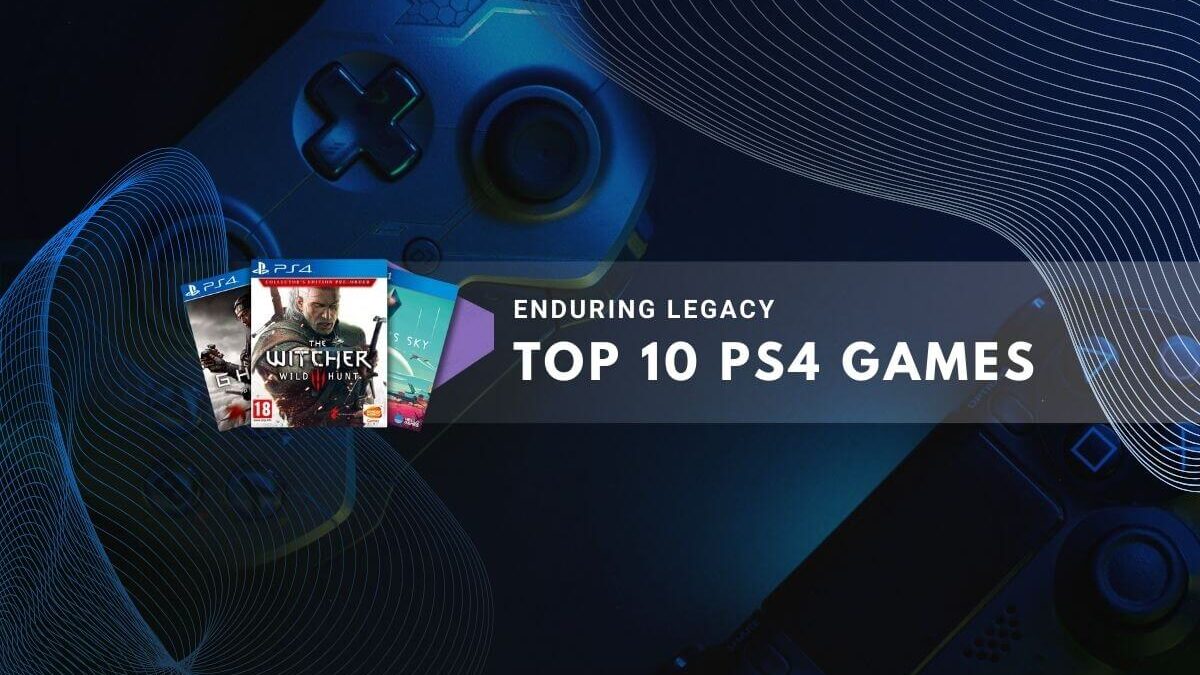

The PlayStation 4 generation closed with numbers that tell only part of the story. Sony’s eighth-generation console moved more than 117 million units globally, but what truly defined this era was not hardware specs or sales charts. It was the games themselves, titles that pushed narrative boundaries, redefined genres, and established benchmarks that developers still chase in 2026.
This analysis draws primarily from the comprehensive list of Top 10 PS4 Games curated by Rumman – رمان (Rumman.net), examining ten titles that collectively represent the pinnacle of what Sony and its partners achieved between 2013 and 2020. These are not simply the most popular entries; they are the experiences that justified the console’s existence and shaped player expectations for years to come.
The Open World Paradox
Red Dead Redemption 2 and Grand Theft Auto V anchor this list, both products of Rockstar Games’ obsessive attention to systemic detail. What separates these from their contemporaries is not scale alone but the density of reactive systems beneath the surface. Red Dead 2’s 99GB footprint houses a world where NPCs remember your transgressions, where animal populations respond to hunting pressure, where mud accumulates on your character’s clothing based on weather and terrain.
Key Features of Rockstar’s Worlds:
- Reactive Systems: NPCs in Red Dead Redemption 2 remember player behavior and adjust interactions accordingly.
- Longevity: Grand Theft Auto V remains relevant in 2026 due to its robust multiplayer component, thirteen years post-release.
- Design Philosophy: Both games prioritize immersion and realism over immediate responsiveness, creating a meditative pace that can be polarizing.
The JRPG Anomaly
Persona 5 Royal occupies a curious position in this lineup. Its 100-plus hour runtime and turn-based combat seem fundamentally at odds with Western AAA conventions. Yet the game achieved critical and commercial success by refusing to compromise its identity. The stylized UI, the jazz-fusion soundtrack, and the blend of high school simulation and supernatural dungeon crawling work precisely because they commit fully to their aesthetic vision.
The Royal edition added roughly 30 additional hours of content, new characters, and mechanical refinements that addressed the base game’s pacing issues. While the absence of Arabic localization remains a barrier for some, the game’s themes of corruption, abuse of power, and societal apathy translate across cultural boundaries.
Narrative Dominance
Three entries on this list come from studios that defined PlayStation’s cinematic approach to game storytelling. The Last of Us Remastered established the template: tight third-person mechanics married to a character-driven narrative. The Last of Us Part II pushed this further, forcing players to inhabit the perspective of the antagonist for half the game, a bold experiment in mandatory perspective-shifting. Uncharted 4, meanwhile, offers a crowd-pleasing adventure that balances cinematic set pieces with exploration and light puzzle-solving, providing Nathan Drake with a graceful exit.
According to a BBC report on PlayStation’s strategic direction, Sony’s focus on single-player narrative experiences has been crucial to the brand’s identity, though the company experimented with multiplayer titles between 2020 and 2025 with mixed results.
The Soulsborne Outlier
Bloodborne stands apart from every other game on this list. It is not interested in accessibility or mass appeal. FromSoftware’s gothic horror excursion demands mastery of its systems or repeated failure. The 30fps frame rate on base PS4 hardware may feel archaic, but the art direction transcends technical limitations.
Why Bloodborne Endures:
- Coherent Vision: The premise devolves from Victorian monster-hunting into cosmic horror through environmental storytelling.
- Combat Mechanics: An aggressive system that rewards risk-taking and pressing forward into danger.
- Replayability: An active community in 2026 sustained by build variety and discovery rather than content updates.
God of War’s Reinvention
The 2018 God of War reboot succeeded by stripping away the excess that defined earlier entries. Gone was the fixed camera and the one-dimensional rage. What remained was a tightly constructed action game about fatherhood, grief, and the weight of past violence.
Innovations in the Reboot:
- Single-Shot Camera: A technique maintained throughout the entire game without visible cuts, creating spatial coherence and locking the player into Kratos’s perspective.
- Leviathan Axe: A weapon mechanic that feels incredibly satisfying through its throw-and-recall function.
- Narrative Depth: The shift to Norse mythology allows for an exploration of Kratos’s struggle against his own legacy of violence.
The Witcher 3’s Sprawling Ambition
CD Projekt RED’s magnum opus earned over 260 Game of the Year awards. The achievement is not in graphics or mechanics, but in the breadth and quality of content. The choice system functions with genuine nuance, with decisions made 40 hours into the game resurfacing in unexpected ways.
Content and Support:
- Side Quests: Secondary storylines carry the weight of main plotlines in lesser games, such as the tragic Bloody Baron questline.
- Expansions: Hearts of Stone and Blood and Wine offer massive amounts of high-quality content, with the latter adding 30-plus hours in a new region.
Metal Gear Solid V’s Unfinished Masterpiece
Hideo Kojima’s final Metal Gear game suffers from an incomplete final act, yet the core gameplay loop of infiltrating enemy bases with unprecedented tactical freedom makes up for narrative shortcomings. The systems interact in ways that support emergent problem-solving, from Fulton extracting soldiers to deploying support dogs.
Technical and Tactical Mastery:
- Adaptive AI: Enemies counter your preferred tactics, such as wearing helmets if you rely on headshots.
- Performance: The game maintains a stable 60fps on console hardware, demonstrating technical optimization.
- Strategic Depth: The Mother Base management metagame adds a layer of long-term strategy.
Comparative Analysis of Key Titles
The following table compares the primary strengths and unique features of these influential titles.
| Game Title | Primary Strength | Unique Feature | Storage Size |
|---|---|---|---|
| Red Dead Redemption 2 | Reactive world systems | NPC memory & dynamic environments | ~99 GB |
| Grand Theft Auto V | Unmatched player freedom | Multiplayer longevity | ~86-98 GB |
| Persona 5 Royal | Stylistic commitment | Social Links system | ~30-39 GB |
| The Last of Us Remastered | Cinematic storytelling | Character-driven post-apocalyptic journey | ~48-50 GB |
| God of War | Cohesive combat & story | Single-shot camera immersion | ~45-72 GB |
| The Last of Us Part II | Emotional narrative depth | Mandatory perspective shifting | ~100 GB |
| Metal Gear Solid V | Tactical freedom | Fulton extraction system & adaptive AI | ~25 GB |
| Uncharted 4: A Thief’s End | Cinematic set pieces | Fluid traversal & rope mechanics | ~44-58 GB |
| Bloodborne | Challenging, fair combat | Risk-reward health rally system | ~25-40 GB |
| The Witcher 3 | Narrative quality in side quests | Nuanced choice consequences | ~34-70 GB |
Technical Considerations for 2026
Players in 2026 face practical questions about running these titles on aging hardware. The PS4 Pro can still deliver acceptable performance, but several games show their age.
- SSD Upgrade: Upgrading to an SSD dramatically reduces load times across the board, particularly beneficial for Persona 5 Royal and Bloodborne.
- Performance Modes: For those with PS4 Pro hardware, prioritizing performance modes over resolution is often worthwhile to ensure smoother frame rates during combat.
- Thermal Management: Games like The Last of Us Part II can push the console to thermal limits, so cleaning ventilation openings is crucial.
Based on what was mentioned on the Rumman – رمان (Rumman.net) website, the PlayStation 4’s game library represents a high-water mark for console exclusives and third-party partnerships that prioritized creative ambition over safe returns. Whether that model can sustain itself in the current market remains an open question. What cannot be disputed is that these ten games, whatever their individual flaws, collectively justified the console’s existence and shaped player expectations in ways that will influence game design for years to come.
For ongoing updates on PlayStation news and game recommendations, you can follow Rumman on Facebook or Telegram.
