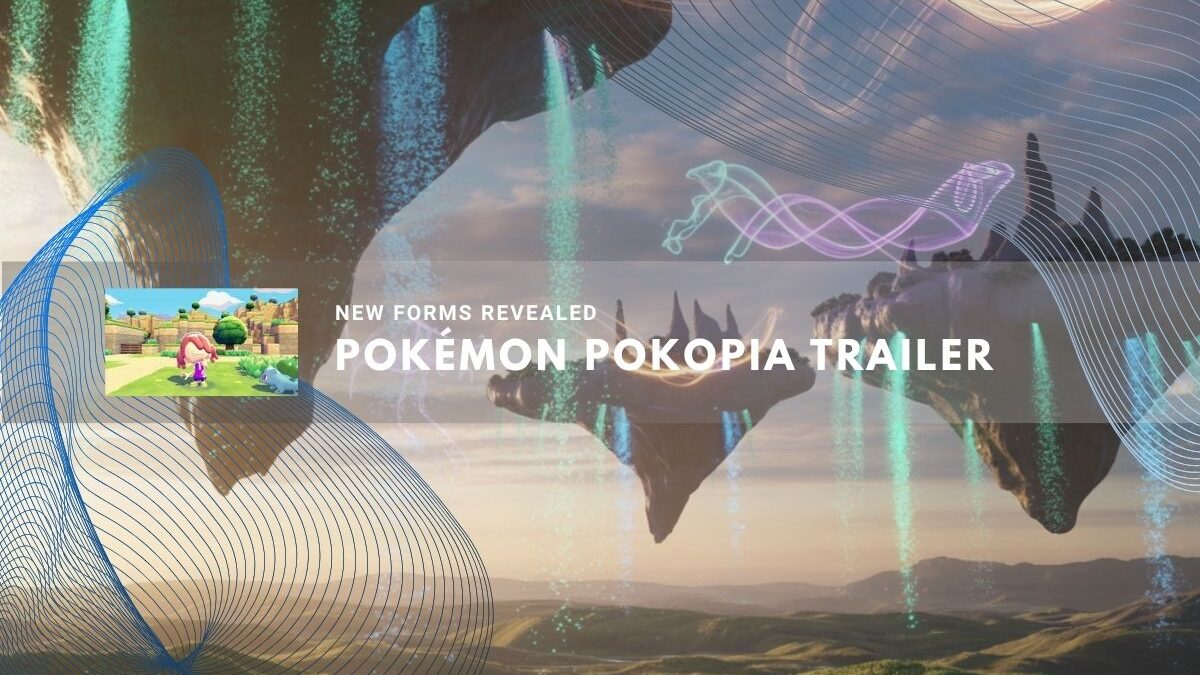
The upcoming game, Pokémon Pokopia, introduces exciting new forms, multiplayer options, and innovative gameplay focused on building and exploration, set to release in March 2026.
New Switch 2 exclusive
Launches on March 5, 2026
Play with Pokémon, build and restore
Three new Pokémon forms introduced
Customizable Ditto avatar
Multiplayer for up to four players
Pokémon Pokopia launches as a Pok Mon adventure on Nintendo Switch 2 with exciting new gameplay. In this pok mon pokopia switch launch, players work with Professor Tangrowth to restore an abandoned island, complete quests, and care for unique Pokémon. The Pokopia Switch 2 gameplay features multiplayer GameShare functionality, allowing shared play with certain restrictions. Pokémon transformations and exploration options are part of the Pokopia Switch 2 2 gameplay, and the physical Game-Key Card format ensures access while requiring online activation and license verification.
Gameplay Features and New Pokémon Forms Await Further Detail
Pokémon Pokopia tasks players with restoring an abandoned island as a Ditto transformed into a human.
While new Pokémon variants are introduced, the exact impact of these forms on gameplay is yet to be fully detailed by the developers.
Transformations into Pokémon like Lapras and Dragonite, enabling expanded travel, are confirmed but gameplay mechanics tied to these forms might evolve with future updates.[1][4][8]
Multiplayer and GameShare Functionalities May Have Restrictions
The GameShare feature allows multiplayer game key with only one copy of the game but has important limitations:
Shared players’ access is temporary, ending once the GameChat session closes.
Not all games support GameShare fully; compatibility and session duration could vary.
Network quality and Nintendo Switch Online subscription affect online multiplayer reliability.
Reports indicate possible framerate drops in multiplayer modes on some titles during extended play, though specifics for Pokémon Pokopia are not yet confirmed.[9]
Physical Game-Key Card Format Comes With Usage Constraints
Pokémon Pokopia’s physical release on Game-Key Card requires the console to download the game data after initial card insertion.
The card itself does not store game data, necessitating online activation for installation and launching.
Game-Key Cards limit the game’s installation to two associated consoles at a time, requiring license transfers and temporary restrictions if switching devices frequently.[2][3][10]
Luca Fischer is a senior technology journalist with more than twelve years of professional experience specializing in artificial intelligence, cybersecurity, and consumer electronics. L. Fischer earned his M.S. in Computer Science from Columbia University in 2011, where he developed a strong foundation in data science and network security before transitioning into tech media.
Throughout his career, Luca has been recognized for his clear, analytical approach to explaining complex technologies. His in-depth articles explore how AI innovations, privacy frameworks, and next-generation devices impact both industry and society.
Luca’s work has appeared across leading digital publications, where he delivers detailed reviews, investigative reports, and feature analyses on major players such as Google, Microsoft, Nvidia, AMD, Intel, OpenAI, Anthropic, and Perplexity AI.
Beyond writing, he mentors young journalists entering the AI-tech field and advocates for transparent, ethical technology communication. His goal is to make the future of technology understandable and responsible for everyone.
Nintendo Life is a popular British website and media company that provides news, reviews, features, and videos about all things Nintendo.
It is owned by Hookshot Media and is considered one of the world's largest Nintendo-focused news sites, covering consoles like the Switch and past systems, as well as eShop and retro titles.
Elena Voren is a senior journalist and Tech Section Editor with 8 years of experience focusing on AI ethics, social media impact, and consumer software. She is recognized for interviewing industry leaders and academic experts while clearly distinguishing opinion from evidence-based reporting.
She earned her B.A. in Cognitive Science from the University of California, Berkeley (2016), where she studied human-computer interaction, AI, and digital behavior.
Elena’s work emphasizes the societal implications of technology, ensuring readers understand both the practical and ethical dimensions of emerging tools. She leads the Tech Section at Faharas NET, supervising coverage on AI, consumer software, digital society, and privacy technologies, while maintaining rigorous editorial standards.
Based in Berlin, Germany, Elena provides insightful analyses on technology trends, ethical AI deployment, and the influence of social platforms on modern life.