Completed
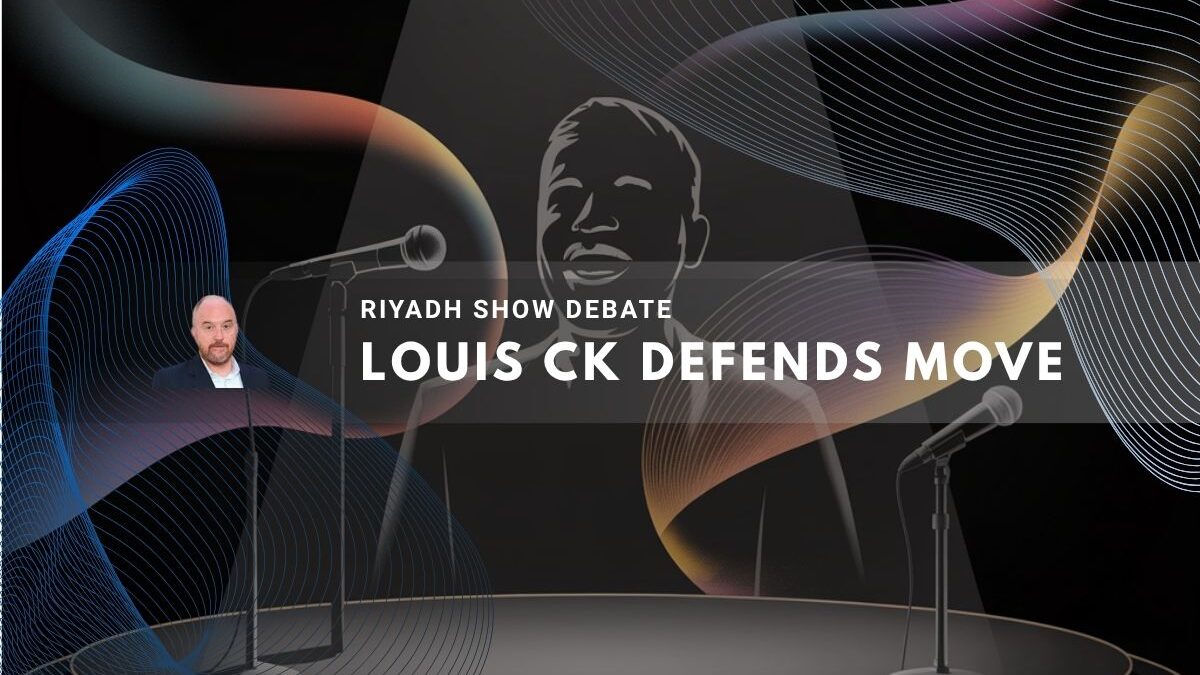
graphic depicting Louis CK with a stage background and colorful waves
UPDATED True SA

Louis CK justifies performing at Riyadh comedy festival as a valuable opportunity

Louis CK defends Riyadh comedy festival performance

Louis CK explained his choice to perform in Riyadh amidst criticism from fellow comedians, emphasizing the opportunity for comedy in Saudi Arabia despite concerns about human rights issues linked to the government.

  • Louis CK performed at Riyadh comedy festival
  • Facing criticism for supporting a repressive regime
  • CK claims it's a valuable opportunity
  • Only limited topics restricted from comedy
  • Other comedians have voiced ethical concerns
  • Jessica Kirson regrets participating; plans to donate her fee
  • Bill Burr enjoyed the experience, sees potential

Louis CK performed at the Riyadh Comedy Festival, held from September 26 to October 9, 2025, in Saudi Arabia’s Boulevard City. The festival was part of Saudi Arabia’s Vision 2030 initiative to diversify its economy and improve its global cultural image by hosting international events.[1][4]

Festival Lineup and Restrictions

The festival featured over 50 comedians, including prominent names like Dave Chappelle, Bill Burr, Kevin Hart, Pete Davidson, Whitney Cummings, and Louis CK himself. The event showcased various comedy styles such as stand-up, satire, and improv.[2][1]

Performers faced contractual content restrictions specifically banning jokes about Saudi Arabia’s government and religion. Louis CK noted these were the only two no-go topics for his set, conditions he accepted to be part of the opening of comedy in a previously closed market.[7]

Ethical Concerns and Criticism

The event drew heavy criticism from human rights organizations and parts of the comedy community. Human Rights Watch condemned the festival as a public relations move by the Saudi government to whitewash severe human rights abuses, including repression of free speech, women’s rights, and LGBTQ+ oppression. They urged performers to use the platform to call for the release of detained activists and to speak out against censorship.[3]

Several comedians, including David Cross and Marc Maron, criticized peers participating in the festival for undermining their previous stances on cancel culture and censorship. Some performers like Nimesh Patel dropped out over ethical reasons, while Tim Dillon was removed from the lineup due to controversial jokes.[5][1]

Performers’ Perspectives

Louis CK defended his decision on Real Time With Bill Maher, acknowledging mixed feelings but emphasizing the cultural opportunity. He highlighted the response to Jessica Kirson, a Jewish lesbian comedian who received a standing ovation, as a sign of unexpected openness in Saudi audiences.[1]

Jessica Kirson later expressed regret for participating under the Saudi government’s auspices but hoped her presence might help LGBTQ+ individuals in Saudi Arabia feel seen. She pledged to donate her festival fee to human rights causes.[1]

Bill Burr described his experience as “mind-blowing,” praising the audience’s enthusiasm and the festival’s potential to foster positive cultural change.[1]

Contextual Timing and Impact

The festival coincided with sensitive historical events, including the seventh anniversary of the murder of journalist Jamal Khashoggi. Critics note this timing as particularly ironic given the festival’s aim to improve Saudi Arabia’s international image through entertainment.[3][7]

The Riyadh Comedy Festival 2025 represented a complex crossroads of culture, politics, and ethics. While it opened doors for international comedians and new audiences, it also sparked debate over complicity in reputational whitewashing by a regime with a troubling human rights record. Louis CK and other performers saw the festival as a platform with potential for dialogue, while critics warned against overlooking broader abuses.[5][3][1]

Sophia Clarke

Sophia Clarke

Senior International Journalist

United Kingdom – London Entertainment

Sophia Clarke is a senior international journalist with nine years of experience covering global politics, human rights, and international diplomacy. She earned her M.A. in International Relations and Journalism from the University of Oxford (2016), where she specialized in global governance, conflict reporting, and cross-cultural communication. Sophia began her career as a foreign correspondent for BBC World Service and later joined The Guardian, where her insightful analyses and on-the-ground reporting from Europe, the Middle East, and Latin America earned her recognition for accuracy and integrity. Now based in Paris, France, Sophia contributes to Faharas NET, providing comprehensive coverage of diplomatic affairs, humanitarian issues, and policy developments shaping the international landscape. Her storytelling combines investigative depth, journalistic ethics, and a strong commitment to amplifying underrepresented voices in global dialogue.

167
Articles
2.1K
Views
9
Shares
Theguardian

Theguardian

Primary Source

No coverage areas yet

Theguardian.com is the digital heartbeat of a 204-year-old newspaper that refuses to erect a paywall. Since migrating online in 1999, the site has grown into a 24-hour global newsroom serving 25 million unique browsers each day, with two-thirds of that traffic originating outside the United Kingdom. From a converted cotton mill in Kings Cross, 600 journalists file in English, Arabic and Hindi, while satellite bureaus in Sydney, Hong Kong, Washington, Lagos and Mexico City ensure the sun never sets on Guardian coverage. Investigative rigour remains the calling card. The 2013 Edward Snowden revelations, published in partnership with the Washington Post, exposed the NSA’s bulk-data dragnet and earned the Pulitzer Prize for Public Service. More recently, the “Pegasus Project” consortium led by Guardian editors uncovered how military-grade spyware sold to 40 governments targeted journalists, human-rights lawyers and even heads of state; the series triggered parliamentary inquiries on four continents and export-license suspensions in Israel and Spain. Every leak undergoes a three-layer verification process: technical forensic analysis, legal consultation under UK defamation law, and an internal “sensitivity board” that weighs public interest against personal harm. The newsroom’s centre-left stance is declared in an editorial code posted on every page, yet opinion and reportage are physically separated. Columnists such as Owen Jones and Polly Toynbee argue for progressive taxation and climate action on dedicated “Comment is Free” pages, while breaking-news live-blogs use neutral phrasing and link to primary documents court filings, scientific papers, leaked spreadsheets so readers can audit sourcing in real time. This transparency ethos extends to corrections: errors are struck through in red at the top of articles, accompanied by a timestamp and editor’s note explaining what changed and why. Funding comes from readers, not advertisers. After watching digital ad rates plummet 40 % between 2016 and 2018, Guardian Media Group pivoted to a voluntary membership model. Supporters can contribute £5 a month or make one-time gifts; in return they receive fewer on-site appeals and access to the “Guardian Extra” newsletter that discloses upcoming investigations. By 2023 reader revenue exceeded £50 million annually, covering 55 % of editorial costs and insulating coverage from corporate pressure. No shareholder dividends are paid; profits are reinvested into climate, inequality and human-rights reporting. Sport, culture and lifestyle verticals attract younger audiences who may arrive for a Champions League match tracker and stay for long-reads on refugee policy. The “Football Weekly” podcast averages 1.2 million downloads per episode, while interactive guides such as “How to read the IPCC report in five charts” distill complex science into shareable visuals. Whether chronicling COP negotiations, live-blogging royal funerals or explaining why lettuce prices tripled overnight, theguardian.com delivers open-access journalism Platform financed by citizens who believe factual, fearless reporting is a public good worth paying for.

30
Articles
313
Views
0
Shares
Elena Voren

Elena Voren

Senior Editor

Blog Business Entertainment Sports News

Elena Voren is a senior journalist and Tech Section Editor with 8 years of experience focusing on AI ethics, social media impact, and consumer software. She is recognized for interviewing industry leaders and academic experts while clearly distinguishing opinion from evidence-based reporting. She earned her B.A. in Cognitive Science from the University of California, Berkeley (2016), where she studied human-computer interaction, AI, and digital behavior. Elena’s work emphasizes the societal implications of technology, ensuring readers understand both the practical and ethical dimensions of emerging tools. She leads the Tech Section at Faharas NET, supervising coverage on AI, consumer software, digital society, and privacy technologies, while maintaining rigorous editorial standards. Based in Berlin, Germany, Elena provides insightful analyses on technology trends, ethical AI deployment, and the influence of social platforms on modern life.

0
Articles
0
Views
0
Shares
490
Updates

Editorial Timeline

Revisions
— by Elena Voren
  1. Replace long paragraphs with concise, focused sections.
  2. Present facts with direct, precise language.
  3. Include reputable sources to support claims.
  4. Balance perspectives: festival aims vs. controversy.
  5. Avoid ambiguous or overly general statements.
  6. Emphasize both cultural significance and sensitivities.
  7. Highlight individual comedian experiences.
  8. Address censorship and contract conditions.
  9. Connect festival to broader Saudi political context.
— by Elena Voren
Initial publication.

Correction Record

Accountability
— by Elena Voren
Add SEO improvements
— by Elena Voren
  1. Added accurate festival dates and location details.
  2. Listed prominent comedians attending.
  3. Included explicit mention of government restrictions.
  4. Highlighted ethical controversy with human rights context.
  5. Introduced comments from Human Rights Watch.
  6. Included perspectives of specific comedians like Kirson and Burr.
  7. Added contextual timing with Khashoggi anniversary.
  8. Explained government role and Vision 2030 link.
  9. Structured content into clear, concise sections.
  10. References to credible sources added.

FAQ

What prompted CK to perform in Riyadh?

He saw it as a unique opportunity for comedy.

How did other comedians react?

They raised ethical concerns over performing there.

What are Kirson's plans after performing?

She plans to donate her fee to charity.