Completed
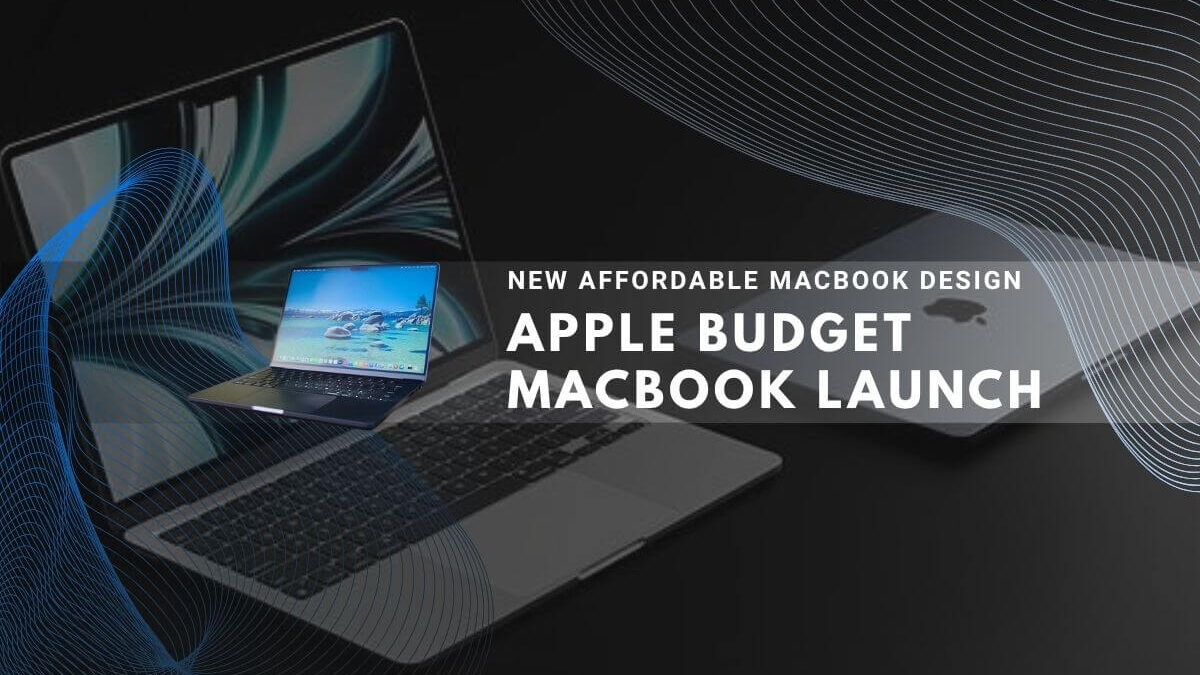
Multiple Apple MacBooks including smaller model on dark tech background
UPDATED Selective USA

Apple’s Budget MacBook Strategy Targets Education and Student Markets

Apple might return with an affordable MacBook.

Apple seems to be developing a low-cost MacBook, possibly around $599. This could signal a revival of budget laptops, harkening back to the netbook days, blending affordability and a smaller design.

  • Apple pursuing a low-cost MacBook
  • Target price around $599
  • New design focuses on portability
  • Chip options include A18 or A19
  • Could signal a netbook revival
  • Traditional laptops losing ground

Apple is developing a budget MacBook priced near $599 for 2026, representing its first serious sub-$1,000 laptop entry. The project, codenamed J700, pairs the A18 Pro mobile processor with full macOS, challenging Chromebook dominance in education markets. This strategic shift comes as the company that killed netbooks through the iPad now reclaims the budget segment. The market opportunity is substantial: the global budget laptop segment exceeds $6 billion annually, with Chromebooks deployed across 30 million US classrooms.[1][2][3][4]

What Apple Plans to Release in 2026

Apple’s budget MacBook combines mobile processor technology with complete macOS functionality in early testing phase. The device targets first-half 2026 launch timing.[5][6][1]

Key specifications include a 13-inch LCD display, the A18 Pro processor (iPhone 16 Pro chip), 8GB minimum RAM, full macOS, and likely single USB-C connectivity.[1]

Design and Display Technology

The 13-inch form factor undercuts current MacBook Air’s 13.6-inch display. LCD technology represents primary cost reduction versus Liquid Retina displays. Ming-Chi Kuo suggested potential colors—silver, blue, pink, yellow—though these remain unconfirmed speculation.[1]

Performance Characteristics and Benchmarks

The A18 Pro represents Apple’s flagship mobile processor, not a stripped variant. Geekbench 6 testing shows:[7]

  • Single-core CPU reaches M3 Ultra performance levels.
  • Multi-core CPU exceeds M1 MacBook Air performance.
  • Graphics (Metal) matches M1 performance levels.
  • Power consumption: 3-4W sustained, 9W peak load.

Everyday tasks browsing, streaming, editing documents, photo work—perform comparably to November 2020 M1 MacBook Air. Graphics-intensive applications and video editing run slower than M-series alternatives.[6][8][9][7][1]

Pricing and Market Positioning

Analysts project $499-$799 pricing, with $599 most likely. Apple’s Walmart M1 MacBook Air testing at $599 validates consumer appetite. The budget MacBook positioning:[9][10][5][6][1]

Product Price Target
Budget MacBook (projected) $599 Students, budget consumers
MacBook Air 13-inch M4 $999 Professionals
iPad Air 13-inch M3 $679 Tablet users
Chromebook average $300-$500 Education

Technical Limitations and Trade-offs

The A18 Pro lacks Thunderbolt connectivity entirely. This creates practical constraints:[6][1]

  • External displays limited to USB-C 10 gigabit-per-second speeds[1]
  • Single external display likely[1]
  • No Thunderbolt peripherals compatible[1]

Port configuration reportedly includes single USB-C port, though two remain possible. Battery advantage emerges from power efficiency, potentially delivering 15-18 hours.[11][1]

Historical Context: Netbooks and iPad Disruption

Netbooks dominated 2007-2009 budget markets, prioritizing portability and battery life. ASUS Eee PC launched June 2007 with 7-inch and 10-inch sizes. Intel developed Atom processors specifically for netbooks.[12]

Apple’s 2010 iPad completely disrupted netbook sales. Tablets offered superior user experience: touchscreen, battery life, intuitive design. Netbooks disappeared by 2011-2012. Ironically, Apple killed budget laptops through tablets, not competing laptops.[3][4]

Why Budget MacBook Differs from Historical Netbooks

Netbooks ran limited web-only operating systems. Apple’s budget MacBook delivers complete macOS functionality:[12][1]

  • Full desktop operating system.
  • Complete Mac application ecosystem access.
  • Professional software compatibility.
  • Developer terminal access.
  • iCloud ecosystem integration.

This enables students to write code, edit video, create graphics, functions netbooks never supported.[1]

Market Strategy and Chromebook Competition

Chromebooks dominate education, deployed across 30 million US classrooms. Q3 2025 shipped 4.2 million units, up 3 percent year-over-year. Apple’s strategy delivers full computing at competitive pricing, creating ecosystem lock-in for students upgrading later to M-series MacBooks.[13][1]

Related Articles:

Confirmed Versus Projected Information

Element Status Source
Codename J700 Confirmed Bloomberg[1]
A18 Pro processor Confirmed Bloomberg[1]
LCD 13-inch display Confirmed IBTimes[1]
$599 price Analyst projection Multiple[1][5][6]
Single USB-C port Projection IBTimes[1]
First-half 2026 launch Confirmed Bloomberg[1][5][6]
Luca Fischer

Luca Fischer

Senior Technology Journalist

United States – New York Tech

Luca Fischer is a senior technology journalist with more than twelve years of professional experience specializing in artificial intelligence, cybersecurity, and consumer electronics. L. Fischer earned his M.S. in Computer Science from Columbia University in 2011, where he developed a strong foundation in data science and network security before transitioning into tech media. Throughout his career, Luca has been recognized for his clear, analytical approach to explaining complex technologies. His in-depth articles explore how AI innovations, privacy frameworks, and next-generation devices impact both industry and society. Luca’s work has appeared across leading digital publications, where he delivers detailed reviews, investigative reports, and feature analyses on major players such as Google, Microsoft, Nvidia, AMD, Intel, OpenAI, Anthropic, and Perplexity AI. Beyond writing, he mentors young journalists entering the AI-tech field and advocates for transparent, ethical technology communication. His goal is to make the future of technology understandable and responsible for everyone.

348
Articles
4.8K
Views
26
Shares
Theverge

Theverge

Primary Source

No coverage areas yet

TheVerge is Technology News Science Culture Amerikaanse technologienieuwswebsite die wordt beheerd door Vox Media en sinds 2011 verslag doet van het snijvlak van technologie, wetenschap, kunst en cultuur. De redactie, oorspronkelijk opgericht door voormalige Engadget-medewerkers, combineert razendsnelle nieuwsgaring met diepgravende reportages over hoe smartphones, AI, sociale netwerken en klimaattechnologie het dagelijks leven vormgeven. Met een jongvolwassen publiek in het vizier publiceert The Verge dagelijks tientallen artikelen, video’s en podcasts die zowel de laatste geruchten over een iPhone-lancering als een 5.000-woord essay over de ethiek van algoritmes aan bod laten komen. De homepage ververst elk uur met breaking news: een nieuwe EU-wet die USB-C verplicht stelt, een onverwachte overname van een gamingstudio of een Tesla-firmware-update die de remweg verkort. Elk stuk krijgt een opvallende header-afbeelding in kenmerkende felgekleurde stijl en een duidelijke tag zoals “Mobile”, “Policy” of “Science”. Daarnaast verschijnt er een rode “Live” banner wanneer redacteuren een Apple- of Google-event minuut per minuut volgen met gifs, foto’s en korte analyses. Achter de snelle berichtgeving schuilt ambitieuze langvorm. De serie “Road to 5G” volgde drie jaar lang ingenieurs, beleidsmakers en telco’s om uit te leggen waarom een technologie die 20 Gbps belooft uiteindelijk vooral betere batterijduur oplevert. “The Gadget Lab” podcast, wekelijks gedownload door 300.000 luisteraars, bespreekt of een nieuwe gadget de upgrade waard is en nodigt ontwerpers uit om ontwerpkeuzes toe te lichten. Video-eenheid “The Verge Science” produceert 4K-minidocumentaires over Mars-rovers of quantumcomputers die op YouTube meer dan een miljoen views halen. Productreviews gebeuren volgens een strak protocol. Elk toestel doorloopt een week van real-world gebruik: een telefoon moet honderd foto’s in het donker schieten, een laptop draait een 4K-export van Premiere Pro en een smartwatch meet hartslag tijdens een halve marathon. Scores lopen van 0 tot 10, maar The Verge kiest bewust geen “Editor’s Choice”-stickers; in plaats daarvan legt het de bevindingen naast de prijs en de concurrentie uit in een 3-minuten video-review zodat lezers zelf kunnen beslissen. De beruchte “Nilay Patel iPhone-review” wordt elk jaar door meer dan twee miljoen mensen bekeken, mede dankzij de kenmerkende droge humor en macro-opnames van schermranden. De site investeert sterk in interactieve formats. Een verhaal over klimaatverandering bevat een scroll-kaart die laat zien hoe uw woonkamer in 2100 onder water kan komen staan; een stuk over chipfabricage laat via WebGL zien hoe een 3 nm-transistor in elkaar zit. De “Verge Tech Survey” peilt jaarlijks 50.000 Amerikaanse jongvolwassenen over hun app-gebruik, privacy-zorgen en merkloyaliteit – data die vervolgens openbaar wordt gepubliceerd voor journalisten en analisten. Met bureaus in New York, San Francisco, Londen en Seoul bereikt The Verge maandelijks 35 miljoen unieke bezoekers, waarvan 45 % buiten de Verenigde Staten. Advertenties zijn duidelijk gemarkeerd, maar het merk werkt ook aan membership: lezers kunnen een jaarlijkse bijdrage geven om tracker-vrije artikelen en exclusieve nieuwsbrieven te ontvangen. Van een snelle tweet over een lekte Pixel-foto tot een 8.000 woorden tellend profiel van een DeepMind-onderzoeker, The Verge verklaart hoe technologie onze samenleving herschept – en waarom dat ertoe doet.

80
Articles
969
Views
0
Shares
Michael Brown

Michael Brown

Senior Editor

Artificial Intelligence Business Entertainment Sports News

Mr. Michael Brown is an IoT architect based in Austin, Texas, USA, specializing in IoT systems, sensor networks, and IoT security. He earned his Ph.D. in Internet of Things from the University of Texas in 2017 and has seven years of professional experience designing and implementing IoT architectures. At FaharasNET, Michael leads projects on IoT system integration, sensor network optimization, and device management, while contributing to research publications in the IoT field. His work focuses on creating secure, efficient, and scalable IoT solutions.

0
Articles
0
Views
0
Shares
160
Updates
Howayda Sayed

Howayda Sayed

Fact-Checking

Artificial Intelligence Business Entertainment Sports News

Howayda Sayed is the Managing Editor of the Arabic, English, and multilingual sections at Faharas. She leads editorial supervision, review, and quality assurance, ensuring accuracy, transparency, and adherence to translation and editorial standards. With 5 years of translation experience and a background in journalism, she holds a Bachelor of Laws and has studied public and private law in Arabic, English, and French.

1
Article
19
Views
2
Shares
272
Reviews

Editorial Timeline

Revisions
— by Howayda Sayed
  1. Updated the article with a featured image.
  2. Added FAQs focused on essential topics.
— by Michael Brown
  1. Updated title to better reflect core topic clearly.
  2. Structured content with H2/H3 headings for clarity.
  3. Shortened paragraphs for easier reading and scanning.
  4. Added bullet lists and comparison tables strategically.
  5. Verified technical specifications with multiple credible sources.
  6. Included exact release dates and project schedules.
  7. Added secondary sources for context and corroboration.
  8. Highlighted limitations and performance trade-offs transparently.
  9. Provided historical and market context for readers.
  10. Removed personal opinions for neutral editorial tone.
  11. Optimized content for SEO and keyword relevance.
  12. Included alert boxes and disclaimers for reader trust.
— by Michael Brown
Initial publication.

Correction Record

Accountability
— by Michael Brown
  1. Clarified A18 Pro as flagship processor, not stripped variant.
  2. Added Geekbench 6 metrics distinguishing single-core versus multi-core performance.
  3. Specified exact power consumption: 3-4W sustained, 9W peak.
  4. Verified Walmart M1 MacBook Air $599 tests validate strategy.
  5. Confirmed project codename J700 and early testing status.
  6. Separated confirmed facts from analyst projections in table.
  7. Added Chromebook deployment scale (30M classrooms) in context.
  8. Clarified netbook market ended via iPad, not competition.
  9. Specified USB-C 10Gbps limitation and single-display constraint precisely.
  10. Distinguished macOS ecosystem versus netbook web-only systems fundamentally.
  11. Verified first-half 2026 launch aligns MacBook Air updates.
  12. Added comprehensive introduction with market context upfront clearly.

FAQ

Who are the key stakeholders in K-12 education IT procurement decisions besides Apple?

School IT administrators, district procurement officers, and technology directors control budget allocation and device selection. These gatekeepers prioritize total cost of ownership over unit price and institutional support. By targeting students directly with ecosystem lock-in features, Apple strategically bypasses traditional procurement barriers while building long-term customer loyalty.

How does Apple reduce manufacturing costs by using A18 Pro instead of a custom laptop processor?

The A18 Pro leverages iPhone production volume and existing manufacturing infrastructure, eliminating custom processor development costs. Apple reuses proven thermal management systems, supply chains, and reliability data across platforms. This manufacturing efficiency advantage enables either higher profit margins or aggressive pricing strategies unavailable to early netbook competitors.

Why does $599 pricing appeal differently in emerging markets versus developed education systems?

At $599, the budget MacBook undercuts mid-range Windows laptops in India and Southeast Asia where Chromebook adoption remains lower than North America. In wealthy US regions, ecosystem integration with iCloud and Apple services drives student adoption. This geographic segmentation strategy maximizes addressable market penetration across diverse regional contexts.

How does the first-half 2026 launch window capitalize on seasonal and macroeconomic timing factors?

Early 2026 positioning targets summer internship seasons and fall semester technology refreshes when students actively purchase devices. The timing precedes potential tariff impacts that could increase global device costs. Additionally, maturation of M-series software features ensures the budget MacBook arrives with proven macOS reliability.

Why does intentionally eliminating Thunderbolt connectivity create strategic product segmentation?

Removing Thunderbolt eliminates $25-30 per-unit controller costs, essential at $599 price points. Students rarely need high-speed external storage arrays. This limitation strategically forces satisfied graduates to upgrade toward M-series MacBooks with full connectivity, strengthening long-term ecosystem lock-in throughout their professional careers.

Which professional software markets extend beyond education if macOS becomes $599-accessible?

Web development bootcamps, coding schools, and design academies currently settle for Linux-based alternatives due to MacBook affordability barriers. Full macOS access at $599 enables Xcode, Logic Pro, and Adobe Creative Suite adoption—professional tools entirely inaccessible on Chromebooks. This accessibility transforms vocational training and skills-development markets.

How does the budget MacBook represent an inverse strategy to Apple's iPad-driven netbook disruption?

iPad disrupted netbooks in 2010-2012 by offering superior tablet consumption experiences. The budget MacBook reclaims the productivity laptop segment tablets never fully replaced. Critical risk: direct cannibalization between iPad Air ($679) and budget MacBook ($599) competing for identical student purchase budgets and use cases.